When we talk about abs testauslösung, we are talking about how your car’s brain checks the brakes. ABS stands for Anti-lock Braking System. It is a vital safety feature that stops your wheels from locking up when you hit the brakes hard. The word “testauslösung” basically means “test triggering” or “test activation.” It is the process of making sure the system can actually kick in when you need it most.
Imagine you are driving on a rainy road and a cat runs out. You slam on the brakes. Without a proper abs testauslösung during your car’s startup or maintenance, you wouldn’t know if the system is ready to pulse the brakes for you. This system helps you steer while braking, which can be a literal lifesaver. Modern cars perform a tiny self-test every time you start the engine, but sometimes mechanics need to trigger it manually to find hidden problems.
Why You Need to Care About Brake Testing
Testing your brakes isn’t just for mechanics; it’s for anyone who wants to stay safe. A successful abs testauslösung ensures that the hydraulic pump and the valves are moving freely. If these parts sit still for too long, they can get stuck. This is common in older cars or cars that sit in a garage for months. When the ABS fails, your car might skid like a sled on ice.
By focusing on abs testauslösung, you are checking the health of your wheel speed sensors and the electronic control unit (ECU). If the computer sees a wrong signal, it turns on the scary yellow light on your dashboard. Regular testing prevents these surprises. It gives you the confidence that your vehicle will behave predictably during an emergency stop on a slick highway.
Detailed Overview of ABS Components
| Component | Function in Testauslösung | Why It Matters |
| Wheel Speed Sensors | Measures how fast each tire spins. | Sends data for abs testauslösung. |
| ABS Control Module | The “brain” that processes data. | Decides when to trigger the pump. |
| Hydraulic Pump | Modulates brake pressure. | Essential for the physical test. |
| Solenoid Valves | Opens and closes brake lines. | Directs fluid during the pulse. |
| Dashboard Light | Visual warning for the driver. | Tells you if the test failed. |
How the ABS Self-Test Works Automatically
Every time you turn your key, your car does a quick “handshake” with its sensors. This is the most basic form of abs testauslösung. You might hear a faint “grrr” or “thump” sound when you first pull away. That is the system briefly moving the pump to make sure it isn’t seized. It is a very smart way for the car to look after itself without you doing anything.
If the car detects that a valve is stuck during this abs testauslösung, it will immediately disable the system. It does this to protect you. It’s better to have normal brakes than brakes that act weird because of a computer glitch. This automatic check happens in milliseconds. It scans the electrical resistance of the sensors and ensures the pump motor is drawing the right amount of power.
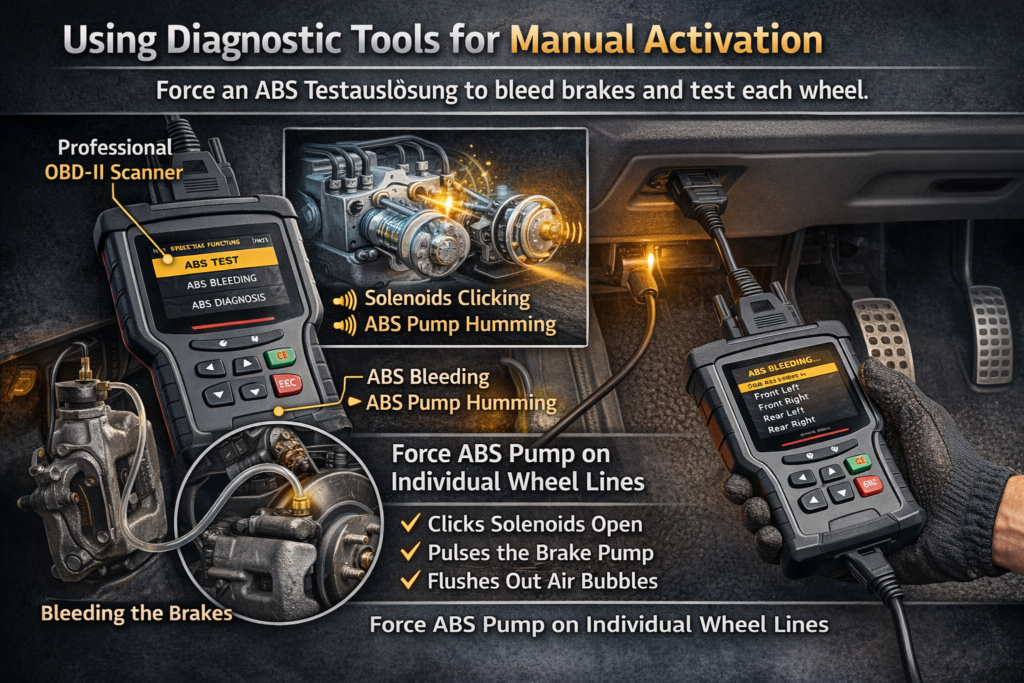
Using Diagnostic Tools for Manual Activation
Sometimes, a simple self-test isn’t enough. Mechanics use an OBD-II scanner to force an abs testauslösung. This is very helpful when bleeding the brakes. When you change your brake fluid, air bubbles can get trapped inside the ABS pump. A manual abs testauslösung opens the internal valves to let that air escape. Without this step, your brake pedal might feel soft or “spongy.”
Using a professional tool for abs testauslösung allows you to test each wheel individually. You can hear the solenoid click and the pump hum. It’s like a doctor using a stethoscope to hear your heart. If you are a DIY fan, getting a scanner that supports ABS functions is a great investment. It helps you find out exactly which part is broken before you spend money on expensive repairs.
Common Signs That Your ABS Test Failed
How do you know if your abs testauslösung didn’t go well? The most obvious sign is the ABS warning light staying on. If that light glows steady, the system has found a fault. Another sign is a pulsating brake pedal when you are just slowing down normally on a dry road. This means the abs testauslösung logic is getting “confused” by a dirty sensor.
You might also feel the steering wheel pull to one side during a hard stop. This suggests that the abs testauslösung is only working on some wheels and not others. If you hear a loud grinding noise that never stops, your pump might be stuck in the “on” position. All these issues mean you should check your sensor rings and wiring for any dirt or rust.
The Role of Wheel Speed Sensors in Testing
The sensors are the “eyes” of the system. For a perfect abs testauslösung, these sensors must be clean. They sit near the wheels and watch a toothed ring spin. If the ring is covered in mud or salt, the sensor can’t read the speed. This causes the abs testauslösung to fail because the computer thinks a wheel has stopped moving when it hasn’t.
Cleaning these sensors is often the easiest fix. I once saw a car that needed a whole new ABS module, or so the owner thought. It turned out to be just a tiny bit of metal debris stuck to the magnetic sensor tip. After a quick cleaning and a fresh abs testauslösung, the light went off. Always check the simple things like wires and plugs before replacing big parts.
Understanding Hydraulic Pressure Modulation
During an abs testauslösung, the system is actually playing with hydraulic pressure. It’s like a very fast “on and off” switch for your brakes. When the computer triggers the test, it checks if it can successfully drop and then raise the pressure in the brake lines. This prevents the tires from skidding across the pavement.
This modulation is what you feel as a “vibration” in the pedal. Many new drivers get scared by this feeling and let go of the brake. But during a real abs testauslösung event, you should keep your foot planted firmly. The system is doing its job! Understanding this process helps you stay calm when the car starts to pulse under your foot during an emergency.
Safety Precautions During Manual Testing
If you are performing a manual abs testauslösung with a scanner, be careful. Always do this while the car is parked or on a lift. You don’t want the brakes to pulse unexpectedly while you are driving in traffic. Make sure your battery is fully charged too. The ABS pump draws a lot of electricity during a test, and low voltage can cause the test to fail.
Also, check your brake fluid level before starting an abs testauslösung. If the fluid is low, you might suck air into the system during the test. This would make your brakes less effective. Safety is the whole point of this system, so don’t take shortcuts. Follow the instructions on your diagnostic tool carefully to ensure a smooth and successful calibration.
How Weather Affects Your ABS Performance
Cold and icy weather is when your abs testauslösung matters most. In winter, salt and slush can build up around the sensors. This often triggers a “fault” during the morning startup abs testauslösung. If you live in a snowy area, it is a good idea to spray your wheel wells with fresh water occasionally to keep the sensors clear of salt.
Wet roads also change how the system reacts. The computer is programmed to look for specific “slip” patterns. If the sensors are working correctly, the abs testauslösung ensures the car stays straight even if two wheels are on ice and two are on dry pavement. This “split-mu” braking is a miracle of modern engineering that keeps families safe every single winter.
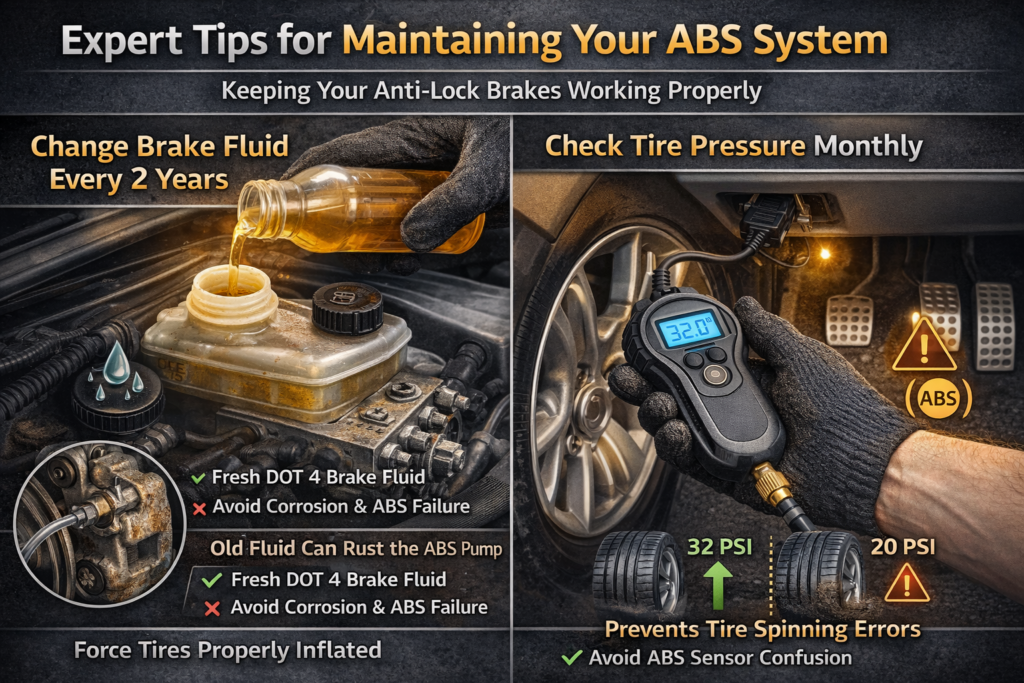
Expert Tips for Maintaining Your ABS System
To avoid issues with abs testauslösung, change your brake fluid every two years. Brake fluid loves to absorb water from the air. Over time, this water can cause rust inside the expensive ABS pump. If the internal parts rust, the abs testauslösung will fail because the valves won’t move. A little bit of maintenance goes a long way in saving you thousands of dollars.
Another tip is to check your tire pressure. If one tire is much lower than the others, it spins at a different speed. This can trick the computer during an abs testauslösung and make it think there is a mechanical failure. Keeping your tires properly inflated helps the sensors stay accurate. It’s a simple task that keeps your safety systems happy and functional.
Conclusion
The abs testauslösung is a quiet hero in your car. It works behind the scenes to make sure you can stop safely and steer out of trouble. Whether it’s the automatic self-test at startup or a manual check by a mechanic, this process is essential for modern driving. By understanding how it works, you can better maintain your vehicle and react correctly during an emergency.
Don’t ignore that ABS light! If your car tells you the abs testauslösung has failed, get it checked out right away. Your brakes will still work, but you won’t have that “safety net” when things get slippery. Take care of your sensors, change your fluid, and your ABS will take care of you for many years to be.
Frequently Asked Questions
1. What does the ABS light mean on my dash?
It means the car’s internal abs testauslösung found a problem. The system is turned off for safety, and you should see a mechanic to read the error code.
2. Can I still drive if the ABS test fails?
Yes, your regular brakes will still work. However, your wheels might lock up during a hard stop, which makes the car harder to control.
3. Why do I hear a noise when I first start driving?
That is usually the automatic abs testauslösung. The car is just checking the pump and valves to make sure they are ready for the road.
4. How do I clean my ABS sensors?
You can remove the wheel and use a soft cloth or a brush to wipe away dirt and metal shavings from the sensor tip located near the brake rotor.
5. Does low brake fluid cause ABS problems?
Yes! If the fluid is too low, the abs testauslösung might fail because there isn’t enough pressure to move the internal components.
6. Is a manual abs testauslösung necessary?
It is usually only necessary if you have replaced a part or if you are trying to remove air from the brake lines during a fluid change.
